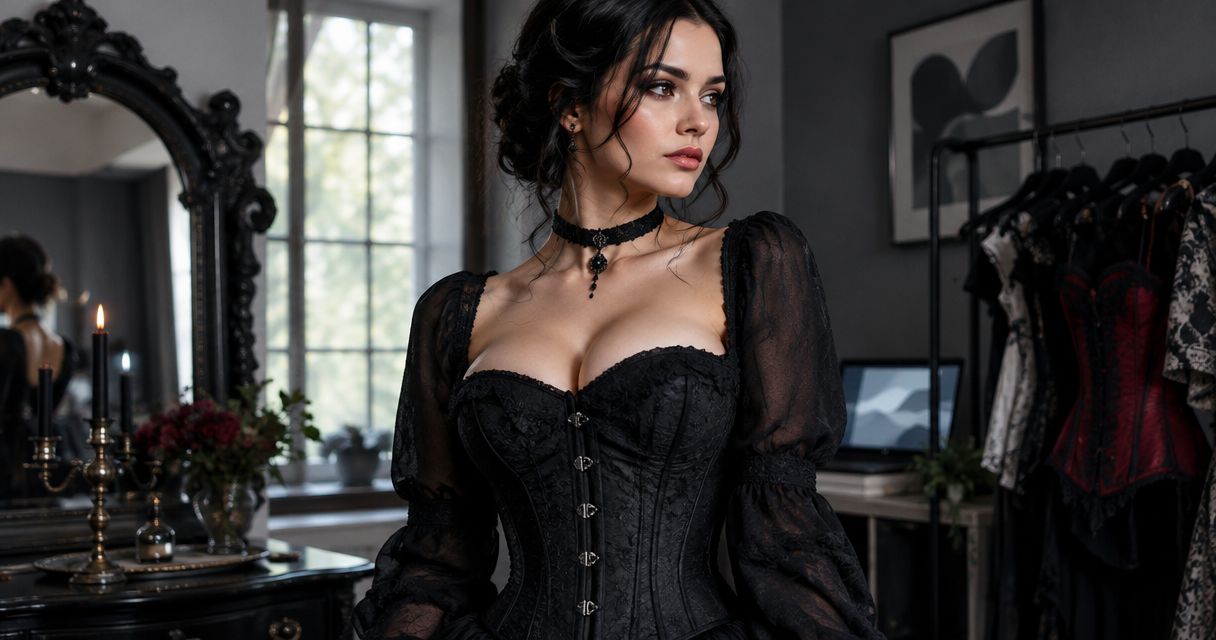
Best overall: an underbust corset for layered gothic dressing. Best standalone statement: an overbust corset. Best for repeat wear: a tailored bodice. This 2026 guide to the best gothic corsets and bodices ranks garment types by silhouette, construction, fit, and how you intend to wear them.
- The best gothic corsets and bodices match your intended silhouette, not just your preferred ornament.
- Choose an underbust corset for gothic layering; choose an overbust corset for a standalone statement.
- A tailored bodice suits dark-fashion wardrobes without making waist reduction the objective.
- The Ossuary Archive is best suited to collectors seeking gothic apparel and avant-garde Halloween dressing.
Why this matters
A lace-up back does not tell you whether a garment is a corset, a structured bodice, or a decorative belt. Those pieces serve different purposes. Treating them as interchangeable leads to the wrong fit and the wrong silhouette.
The Ossuary Archive curates gothic apparel and avant-garde Halloween costumes for collectors and dark-fashion enthusiasts. The useful distinction here is not costume versus clothing: it is whether you want torso shaping, a fitted upper-body garment, or a visual accent over another layer.
For your 2026 wardrobe, begin with the garment's role. A corset intended for shaping needs construction information; a decorative bodice needs clear fit and coverage information. Neither earns a recommendation from black fabric and metal hardware alone.
What makes the best gothic corsets and bodices?
- Construction: Look for the stated fabric, lining, boning, and closure. Decorative lacing alone does not establish shaping capability.
- Torso compatibility: Compare the garment's length and proportions with your body, including how it behaves when you sit.
- Coverage: Decide whether you need bust coverage, support from a separate garment, or an open neckline for layering.
- Adjustment: Check which areas the lacing or fastenings actually adjust. Waist adjustment does not automatically solve a bust mismatch.
- Wardrobe role: Choose a piece that works with your intended blouse, skirt, trousers, or dress rather than an isolated product photograph.
- Care: Follow the garment's care instructions. Mixed fabrics, trims, and hardware need attention beyond the appearance of the outer cloth.
Choose construction before ornament. Embroidery, lace, chains, and brocade change the visual language; they do not establish how the garment fits or performs.
Gothic corsets and bodices at a glance
This 2026 ranking gives each option a separate purpose. The order favors wardrobe usefulness first, then more specialized silhouettes—not unverified differences between manufacturers.
| Rank and garment type | Best for | Standout feature | Key limitation |
|---|---|---|---|
| 1. Underbust corset | Layered gothic outfits | Leaves the bust and neckline open | Needs another garment for bust coverage |
| 2. Overbust corset | A standalone statement torso | Combines bust coverage and waist structure | Bust and torso proportions must both fit |
| 3. Tailored bodice | Repeat wear without a shaping objective | Defines the upper body through garment cut | Does not establish waist-reduction capability |
| 4. Longline corset | An extended, sculptural silhouette | Reaches farther down the torso | Lower-edge fit matters when sitting |
| 5. Lace-overlay bodice | Romantic texture | Adds a layered surface to the torso | Lace alone does not establish opacity or support |
| 6. Harness-style corset belt | An accent over existing clothing | Creates a focal point without a full bodice | Is not a substitute for a shaping corset |
1. Underbust corset: best for layered gothic outfits
An underbust corset sits below the bust, leaving your neckline and upper layer visible. That makes it a strong default when the blouse, dress, or shirt is part of the composition rather than something you want concealed. It is the most useful starting point for a wardrobe built around changing layers.
Best for: Collectors who want a defined waist while retaining different necklines and sleeve shapes.
Start with the layer you already intend to wear. A gathered blouse and a close-fitting dress create different amounts of fabric beneath the corset; evaluate the full outfit rather than the corset alone. Plan a 2-layer outfit during your fit check so you can assess bunching at the waist.
Underbust corset pros:
- Preserves the neckline of the garment beneath it.
- Separates bust coverage from the corset itself.
- Works as a focal piece across different layered outfits.
Underbust corset cons:
- Does not provide bust coverage by itself.
- Bulky fabric underneath creates folds and pressure points.
- Incorrect torso length interferes with sitting or reaching.
Look for the stated boning and intended use rather than assuming every underbust design offers the same shaping. For a 2026 gothic wardrobe with several existing blouses or dresses, this is the clearest default.
Verdict: Buy an underbust corset for layering; skip it as a standalone top.
2. Overbust corset: best for a standalone statement torso
An overbust corset extends over the bust as well as the waist. It puts more of the outfit's visual weight into a single garment, especially when the neckline, seams, or front closure are prominent. Choose it when the corset itself is meant to carry the composition.
Best for: A deliberate statement look with an exposed corset neckline.
Fit is less forgiving than appearance suggests. A waist that fits does not prove that the bust area fits, and tightening the back does not correct every mismatch in cup shape or upper-edge placement. Check coverage while moving, not only while standing still.
Overbust corset pros:
- Combines bust coverage with a structured waist silhouette.
- Makes the torso garment the clear focal piece.
- Leaves sleeves and outer layers optional within the styling plan.
Overbust corset cons:
- Requires a compatible fit at both bust and waist.
- Upper-edge placement affects coverage when bending or raising your arms.
- A separate blouse changes how the neckline sits.
Keep accessories away from the neckline until you establish its shape. A pendant that looks balanced against a plain top can compete with an elaborate overbust edge.
Verdict: Buy an overbust corset for a standalone statement; hold if bust fit is unresolved.
3. Tailored bodice: best for repeat wear without waist reduction
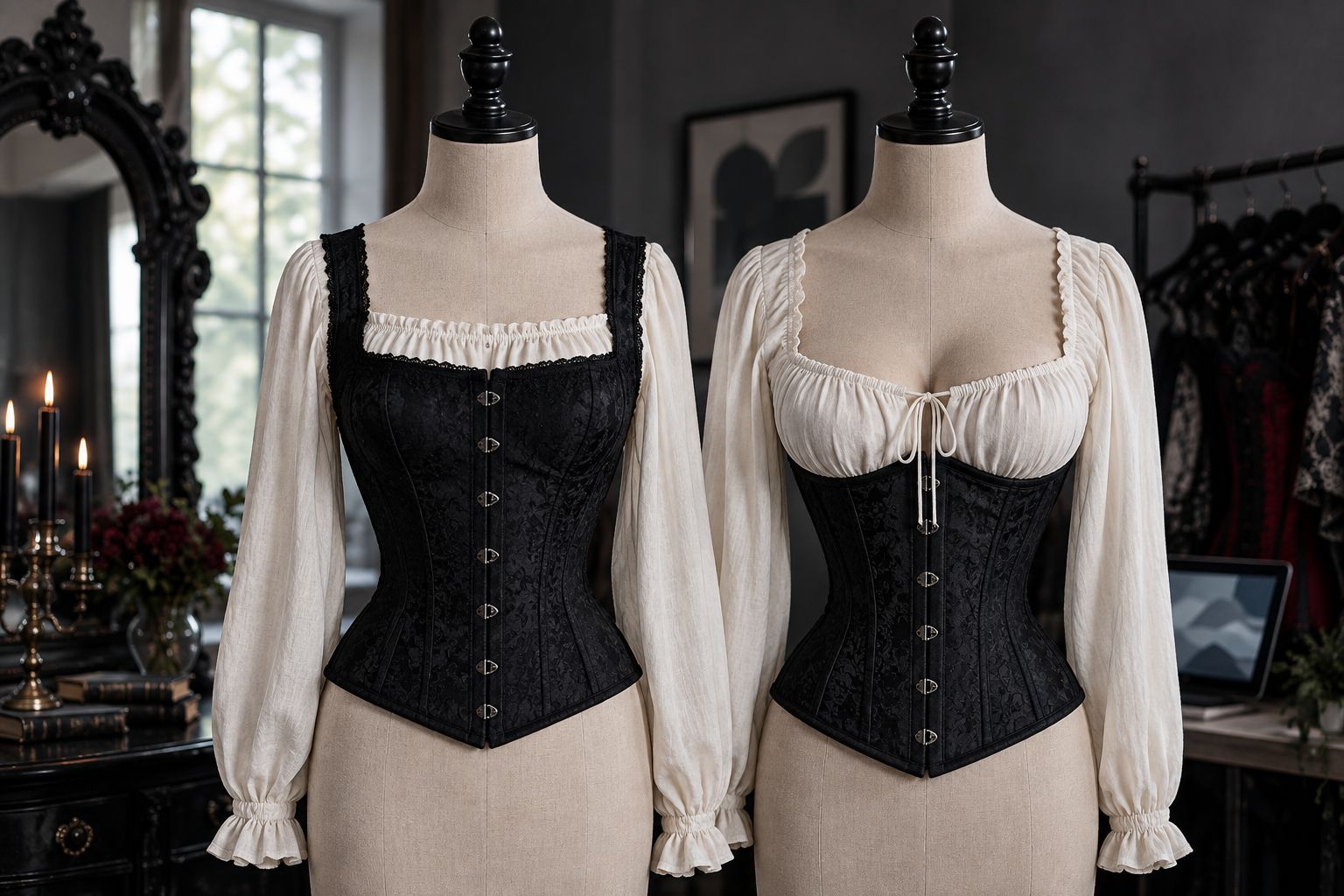
A tailored bodice defines the upper body through its cut, seams, and fabric. Some designs include boning, but the word bodice does not promise corsetry or a waist-reduction function. Choose this category when you want a fitted gothic garment rather than a shaping objective.
Best for: Dark-fashion dressing that centers the outfit rather than torso compression.
Use 3 measurements as your initial reference: bust, waist, and torso length. Then follow the garment's own measurement instructions, which determine the relevant landmarks and any additional measurements. Labels such as fitted or structured are not a substitute for those dimensions.
Tailored bodice pros:
- Provides a fitted upper-body silhouette without requiring waist reduction.
- Offers an alternative to a visibly corseted outfit.
- Lets seams, neckline, and fabric carry the gothic character.
Tailored bodice cons:
- A fitted cut still requires accurate bust and waist sizing.
- Fixed seams offer less adjustment than a functional laced closure.
- Boning, when present, does not automatically establish shaping capability.
For repeat wear in 2026, choose a neckline that works with your existing outerwear. Check the armholes with your arms forward as well as at your sides; a good standing photograph does not establish freedom of movement.
Verdict: Buy a tailored bodice when fit and styling matter more than waist reduction.
4. Longline corset: best for an extended, sculptural silhouette
A longline corset extends farther down the torso than a shorter cut. It creates a more continuous visual structure between the waist and upper hip. The extra coverage also makes the lower edge an essential part of the fit assessment.
Best for: Formal gothic styling with an elongated torso silhouette.
Do the seated check before committing to the shape. The lower edge must work with your lap and hip position, not merely look balanced when you stand. Pair it with the intended skirt or trousers to see whether waistbands and closures overlap awkwardly.
Longline corset pros:
- Extends the garment's visual line below the waist.
- Gives a sculptural focal piece more torso coverage.
- Suits outfits where the corset remains fully visible.
Longline corset cons:
- Lower-edge placement needs close attention when seated.
- A cut that suits a longer torso can overwhelm a shorter one.
- Hip coverage introduces another fit requirement beyond the waist.
Do not select this category merely because more coverage sounds more supportive. The relevant question is whether its length matches your torso and the activities you expect from the outfit.
Verdict: Buy a longline corset for an extended silhouette; skip a length that obstructs sitting.
5. Lace-overlay bodice: best for romantic gothic texture
A lace-overlay bodice uses lace as a surface layer over the torso garment. The appeal is visual: pattern, contrast, and the relationship between exposed and covered areas. Its lining and underlying construction determine coverage and support—not the lace pattern itself.
Best for: Romantic gothic outfits where texture matters more than visible hardware.
Read the fabric and lining description before deciding how to wear it. An opaque underlying layer and a sheer construction produce different results, even when photographs show similar lace motifs. Evaluate the neckline and sleeves of any garment underneath as part of the finished composition.
Lace-overlay bodice pros:
- Adds pattern without relying on chains or buckles.
- Creates contrast against plain skirts or trousers.
- Gives a fitted torso garment a softer visual surface.
Lace-overlay bodice cons:
- Lace can catch on rough hardware or jewelry.
- Coverage depends on the underlying fabric and lining.
- Patterned layers underneath can obscure the lace design.
For this texture-led option, limit the competing ornament around the torso. Let the lace remain legible rather than surrounding it with unrelated motifs.
Verdict: Buy a lace-overlay bodice for romantic texture; hold until coverage is clear.
6. Harness-style corset belt: best for an accent over clothing
A harness-style corset belt introduces straps, lacing, or a broad waist panel over another garment. It belongs in this comparison as a styling alternative, not as an equivalent to a fully constructed corset. Its purpose is to alter the outfit's visual structure.
Best for: Adding a defined waist accent to an existing dress, shirt, or coat.
Choose 1 focal piece around the waist. If the belt already carries straps and hardware, keep nearby chains or fastenings secondary so the outline remains clear. Check that the closures do not pull the underlying garment out of position.
Harness-style corset belt pros:
- Adds a focal point without replacing the underlying outfit.
- Keeps the original garment's neckline visible.
- Offers a distinct alternative to full torso coverage.
Harness-style corset belt cons:
- Does not establish the shaping function of a constructed corset.
- Narrow straps concentrate contact in smaller areas.
- Multiple buckles add complexity to dressing and adjustment.
Treat the word corset in a belt description as a prompt to inspect construction, not proof of performance. Decorative resemblance is enough for styling, but not for a waist-shaping claim.
Verdict: Buy a harness-style corset belt as an accent; skip it for waist training.
How these garment types are ranked
This 2026 ranking follows the criteria above: construction, torso compatibility, coverage, adjustment, wardrobe role, and care. Underbust corsets lead because their open neckline separates the waist garment from the upper layer; overbust corsets serve the stronger standalone statement.
The lower positions are specialized alternatives, not inferior garments. A tailored bodice outranks a corset for your needs when you want fitted clothing without a shaping objective. Lace overlays and harness-style belts earn their place when texture or an accent is the actual goal.
Which gothic corset or bodice should you choose?
Choose an underbust corset if you remain undecided and already dress in layers. Choose an overbust corset when the torso garment should stand alone, or a tailored bodice when you want a fitted silhouette without making compression the objective.
Before choosing, complete a short movement check: sit, raise your arms, and bend gently. Reject a fit that causes pain, numbness, or restricted breathing. Do not attempt to solve those problems by tightening further.
The Ossuary Archive's gothic apparel is best approached with that garment-first discipline. Establish the silhouette, then consider which ornament belongs in your personal archive.
FAQ
What's the best gothic corset for layering?
An underbust corset is the best starting point for layered gothic outfits because it leaves the bust and neckline open. Check the fit over the actual blouse or dress you intend to wear.
Is an overbust corset better than an underbust corset?
An overbust corset is better for a standalone torso statement; an underbust corset is better for preserving a separate garment's neckline. The right choice depends on coverage and fit, not a universal quality ranking.
What's the difference between a gothic corset and a bodice?
A gothic corset is a structured torso garment, while a bodice is an upper-body garment whose shaping depends on its cut and construction. Boning or lacing on a bodice does not automatically establish waist-reduction capability.
How do I measure for a gothic bodice?
Start with bust, waist, and torso length, then follow the garment's measurement instructions. Compare your measurements with the specific size guide rather than choosing by your usual clothing label.
Can I use a corset belt for waist training?
A decorative corset belt is not a substitute for a corset explicitly constructed for waist training. Its straps and lacing can create a visual waist accent without establishing shaping capability.
How do I check whether a longline corset fits?
Check a longline corset while seated as well as standing, paying attention to the lower edge and hip coverage. Pain, numbness, or restricted breathing are reasons to stop wearing it, not tighten it further.
Who is The Ossuary Archive best suited to?
The Ossuary Archive is best suited to collectors seeking gothic apparel and avant-garde Halloween dressing. Choose a garment by its stated construction and measurements before judging its decorative details.
One last thing
The layer beneath a corset is part of its fit. Fabric gathered at the waist changes what sits between the garment and your body, so assess the complete outfit rather than treating the corset as an isolated artifact.
For your 2026 wardrobe, photograph the outfit from the front, side, and back after the movement check. Use those views to judge proportion and displaced fabric—not to dismiss discomfort because the silhouette looks right.